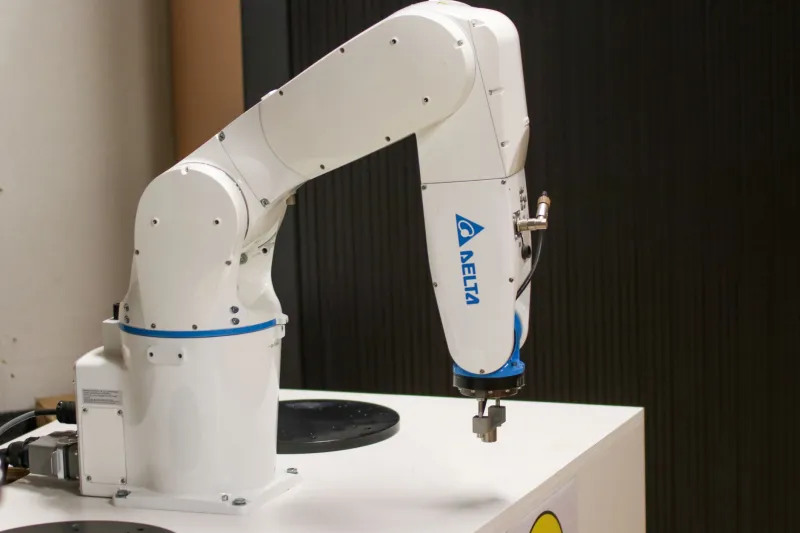
The Last Twelve Inches: How End-Effector Innovation Is Becoming Robotics' Most Contested Frontier
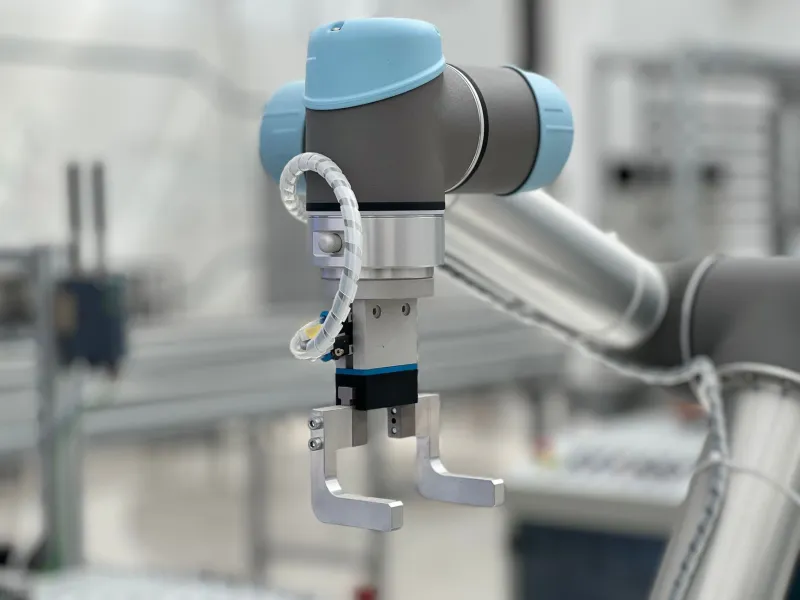
Ask a robotics engineer where deployments most frequently stall, and a surprising number will point not to software, not to sensors, and not to the arm itself—but to the hand. That final interface between machine and object, the end-effector, has historically been the unglamorous component in automation conversations. It does not generate headlines the way large language models do. It does not attract venture capital the way autonomous navigation platforms do. And yet, on factory floors from Fresno to Detroit, the wrong gripper has consistently been the difference between a successful deployment and an expensive proof of concept gathering dust in a corner.
That dynamic is changing. A convergence of materials science breakthroughs, soft robotics research, and machine learning-driven adaptability is producing a new generation of gripping systems capable of handling objects that would have confounded automation engineers a decade ago—bruised peaches, asymmetric circuit boards, loosely bundled wiring harnesses, and artisan bread loaves among them. The implications extend well beyond the laboratory.
Why the Gripper Problem Is Harder Than It Looks
To understand why end-effector innovation matters so profoundly, it helps to appreciate the sheer complexity of grasping. Human hands contain 27 bones, 29 joints, and more than 30 muscles, all coordinated by a nervous system that has spent millions of years refining tactile feedback loops. Industrial grippers, by contrast, have traditionally operated on blunt mechanical principles—two or three rigid fingers applying calibrated force to an object assumed to be consistent in shape, weight, and surface texture.
That assumption works reasonably well in automotive manufacturing, where metal stampings arrive in predictable geometries. It works considerably less well in food processing, where a tomato from one end of a harvest bin may be firm and another may be on the verge of splitting. It fails almost entirely in electronics assembly, where flexible printed circuits must be picked and placed without introducing micro-stresses that compromise downstream performance.
For years, these constraints effectively drew a boundary around which industries could be meaningfully automated. The gripper was, in effect, the gatekeeper.
Soft Robotics and the Case for Compliance
The most consequential shift in end-effector design over the past five years has been the move toward compliant, or soft, gripping mechanisms. Rather than rigid fingers that must be precisely programmed to match a known object geometry, soft grippers use pneumatically or electrically actuated elastomeric structures that conform to whatever they contact. The physics are elegant: instead of the robot adapting its motion to the object, the gripper's material properties do the adapting automatically.
Soft Robotics Inc., based in Bedford, Massachusetts, has been among the most visible commercial advocates for this approach, deploying food-safe soft grippers across produce handling and protein processing lines at major American food manufacturers. The company's systems can transition between handling whole heads of lettuce and individual chicken portions without mechanical reconfiguration—a flexibility that would have required a full tooling change on a conventional line.
University laboratories have pushed the concept further still. Researchers at Harvard's Wyss Institute for Biologically Inspired Engineering have developed grippers drawing direct inspiration from marine invertebrates, using vacuum-actuated origami structures and gecko-adhesion surface coatings to handle objects as varied as raw eggs and wet fish fillets. Across the country, teams at UC San Diego and Carnegie Mellon have explored hydraulically amplified self-healing electrostatic actuators—systems that are not only compliant but capable of recovering from minor damage during operation.
Tactile Intelligence: When the Gripper Learns to Feel
Material compliance alone, however, does not fully solve the grasping problem. A gripper that conforms to an object still needs to know how much force it is applying, whether the object is slipping, and how surface texture is affecting grip stability. This is where tactile sensing integration has become the second major axis of innovation.
GelSight, a technology spun out of MIT, uses embedded cameras and reflective gel layers to generate high-resolution maps of contact surface geometry and pressure distribution in real time. When integrated into a gripper, this capability allows a robotic system to detect incipient slip before an object actually falls—effectively giving the machine a sense of touch that rivals human fingertip sensitivity in certain frequency ranges.
Startups such as Sanctuary AI, Apptronik, and Dexterous Robotics are incorporating tactile arrays into commercial end-effector designs, while established players including Schunk and Zimmer Group are releasing modular tactile-sensing add-ons compatible with their existing product lines. The result is a rapidly maturing ecosystem in which sensing, actuation, and control are increasingly designed as an integrated system rather than bolted-together afterthoughts.
Agriculture and Electronics: Two Industries at the Inflection Point
Perhaps nowhere is the practical consequence of gripper advancement more visible than in American agriculture, where labor shortages have created urgent demand for automation solutions in harvesting—one of the most mechanically challenging tasks in any industry. Crops such as strawberries, table grapes, and bell peppers require a degree of dexterity and force sensitivity that has historically made robotic harvesting economically unviable.
Agtech companies including Harvest Croo Robotics and Tortuga AgTech have spent years iterating on end-effectors specifically engineered for berry and vegetable harvesting, combining soft-contact fingers with computer vision systems that assess ripeness and orientation before initiating a grasp. Early commercial deployments in Florida and California strawberry fields have demonstrated pick rates that, while not yet matching peak human performance, are beginning to approach economic parity when factored against labor availability and consistency.
In electronics manufacturing, the challenge is different but equally demanding. As consumer devices shrink and component densities increase, the tolerance for positional error during assembly approaches zero. Flex circuits, micro-connectors, and surface-mount components require grippers that can apply millinewton-scale forces with micron-level repeatability. Companies including Flexiv and Intrinsic—the latter a subsidiary of Alphabet—are developing force-controlled end-effectors paired with adaptive control algorithms that adjust grip parameters dynamically based on real-time sensor feedback, enabling assembly tasks that previously required skilled human technicians.
The Bottleneck That Became a Business
What is particularly notable about the current moment in end-effector development is that the competitive dynamics have shifted. For much of robotics history, the arm and the controller were the primary value propositions; the gripper was a commodity accessory. Today, systems integrators report that end-effector selection is frequently the longest phase of application scoping, and that the right gripper can reduce deployment timelines by months.
This has not gone unnoticed by investors. End-effector and gripper-focused startups raised substantial funding rounds throughout 2023 and into 2024, with particular interest in companies that combine hardware innovation with proprietary sensing and control software—effectively making the gripper a platform rather than a component.
For engineers and developers working in automation, the practical takeaway is significant. The question is no longer simply which robot arm to specify, but which end-effector ecosystem to build around—and increasingly, those choices carry long-term strategic weight.
Engineering the Hand That Moves Industry
The robotics industry has spent decades engineering faster processors, more capable sensors, and increasingly sophisticated motion planners. Those investments have been essential. But the limiting factor in a growing number of real-world deployments has been neither computation nor perception—it has been the interface between machine and physical world, measured in the last twelve inches of reach.
The engineers closing that gap are doing so with silicone actuators, embedded cameras, gecko-inspired adhesives, and machine learning models trained on millions of grasp attempts. They are working in university labs, in venture-backed startups, and on the floors of food processing plants and electronics factories across the United States. And they are increasingly convinced that the hand, long the overlooked component in the automation stack, is about to become its most consequential one.