Dexterity as Destiny: How the Race to Build Smarter Grippers Is Redefining Robotic Automation
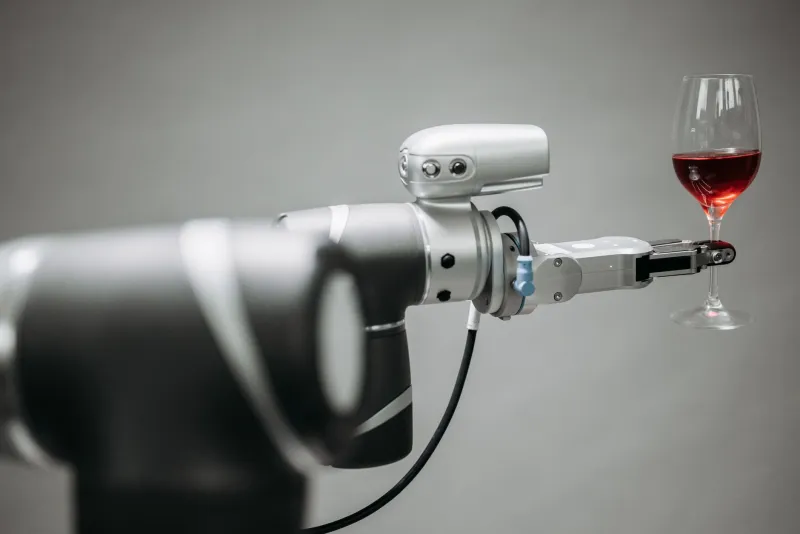
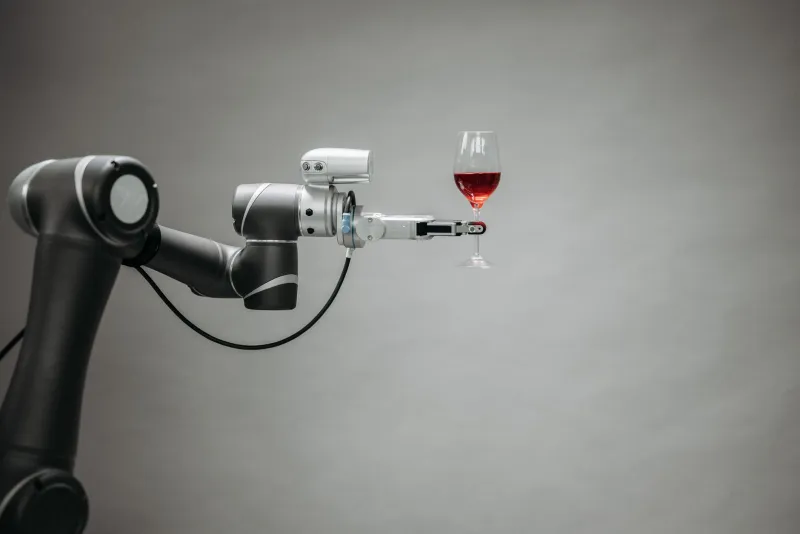
For most of the past four decades, the robotic arm commanded the spotlight. Engineers obsessed over reach, repeatability, and payload ratings. The gripper—the device that actually touches the world—was treated as an afterthought, a commodity bolted on at the end of the design process. That era is over.
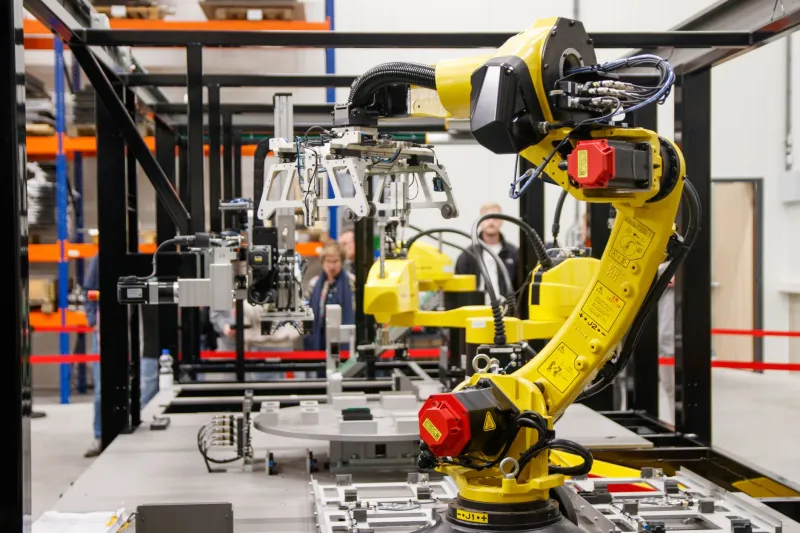
Across American warehouses, food processing plants, and electronics assembly lines, robotic manipulation has become the single most consequential bottleneck in automation programs. Companies are discovering that a six-axis arm capable of millimeter-level precision is only as useful as its ability to reliably grasp what sits in front of it. And what sits in front of it is rarely the same thing twice.
The Manipulation Problem, Stated Plainly
Human hands are extraordinarily capable instruments. They adjust grip force in real time, accommodate irregular geometry without conscious thought, and switch between delicate and forceful contact within the same task. Replicating even a fraction of that capability in a mechanical end-effector has proven to be one of robotics engineering's most stubborn challenges.
Traditional two-finger parallel grippers work well within tightly constrained environments—picking identical parts from a known fixture, for instance. But modern logistics and manufacturing operations are anything but constrained. A single fulfillment center might require a robot to handle a paperback novel, a glass jar, a bundle of cables, and a bag of frozen vegetables within the same hour. No single rigid gripper geometry handles all of those objects without compromising performance on at least one.
The conventional solution has been tool changers—automated systems that allow a robot to swap end-effectors depending on the task. They work, but they introduce latency, mechanical complexity, and additional failure points. In a high-throughput environment, the seconds consumed by a tool change compound into meaningful productivity losses. The industry is increasingly asking whether a single, sufficiently adaptive gripper can eliminate that overhead entirely.
Where the Engineering Investment Is Going
The response from US robotics developers has been substantial. Several distinct technical approaches are now competing for dominance, each with its own set of trade-offs.
Soft and compliant grippers use flexible materials—silicone, elastomers, textile-based actuators—to conform around irregular objects rather than clamping at fixed contact points. Companies such as Soft Robotics and Festo's US operations have advanced this approach considerably. The primary advantage is inherent adaptability; the primary limitation is reduced force output and durability under high-cycle industrial conditions.
Electroadhesive grippers apply electrostatic force to grip flat or lightly textured surfaces without mechanical contact pressure. These designs excel with electronics components and thin sheet materials but struggle with conductive objects and surfaces that accumulate dust or contamination.
Vacuum-based systems remain the workhorse of e-commerce fulfillment, with suction cups and Bernoulli-effect grippers handling the majority of flat-surfaced parcel picking. Their limitation is equally well known: porous, deformable, or heavily curved surfaces defeat them routinely.
Dexterous multi-fingered hands, once the exclusive province of research laboratories, are beginning to edge toward commercial viability. Developments from organizations including Sanctuary AI and Apptronik suggest that anthropomorphic hand designs, combined with advanced machine learning for grasp planning, could eventually handle the full range of objects that human workers encounter. The engineering cost and mechanical complexity remain significant barriers, but the trajectory is clearly toward greater capability at lower price points.
The Speed-Adaptability Trade-Off
Every gripper designer eventually confronts the same fundamental tension: the design choices that improve adaptability tend to reduce cycle time, and the choices that maximize throughput tend to reduce the range of objects a gripper can reliably handle.
Soft compliant grippers, for example, require time for their flexible elements to conform around an object and for actuation pressure to equalize. In a fulfillment center moving ten thousand units per shift, that additional fraction of a second per pick translates into a measurable throughput deficit relative to a rigid gripper optimized for a narrower object class.
Some developers are attempting to resolve this tension through hybrid architectures—grippers that combine a rigid structural core with compliant contact surfaces, or that use variable-stiffness actuators capable of switching between compliant and rigid modes depending on task requirements. These designs are promising, but they introduce additional control complexity and, often, additional cost.
The cost dimension is not trivial. A high-performance adaptive gripper from a leading US manufacturer might carry a price tag of several thousand dollars—sometimes approaching or exceeding the cost of the collaborative robot arm it is attached to. For small and mid-sized manufacturers evaluating automation investments, that calculus significantly affects deployment decisions.
Sensing as the Missing Layer
Many engineers now argue that the gripper hardware debate obscures an equally important variable: sensing. A mechanically capable gripper paired with inadequate tactile or force feedback will underperform a simpler design equipped with rich sensory data and intelligent control.
Tactile sensor arrays embedded in gripper fingertips can detect slip before it becomes a drop, adjust contact force in response to surface compliance, and identify object properties—texture, rigidity, temperature—that inform grasp strategy. Companies such as GelSight and Contactile have demonstrated that thin, high-resolution tactile sensors can be integrated into commercially practical gripper designs without prohibitive cost increases.
The pairing of tactile sensing with machine learning-based grasp planning represents what many in the field consider the most promising near-term path to genuinely generalist manipulation. Rather than designing a gripper geometry that mechanically accommodates every possible object, this approach trains the system to select and execute appropriate grasp strategies dynamically, using sensory feedback to adapt in real time.
What This Means for Manufacturers and Developers
For US manufacturers evaluating robotic automation investments, the gripper landscape presents both opportunity and complexity. The days of selecting a gripper from a one-page catalog and expecting it to handle a diverse product mix are largely gone. Serious deployments now require systematic analysis of the object population the robot will encounter, the acceptable failure rate, the cycle time requirements, and the total cost of ownership across the gripper's service life.
For robotics developers and engineers, the gripper problem represents one of the most technically rich areas of active development in the field. Advances in materials science, embedded sensing, and learned manipulation policies are converging in ways that make this a genuinely exciting design space—one where creative engineering solutions still carry decisive competitive advantage.
The arm, for all its sophistication, has largely become a commodity. What differentiates a robotic system capable of handling the real-world complexity of American manufacturing and logistics is increasingly determined by what is attached to its wrist. The companies that solve the gripper problem at scale, at acceptable cost, and with sufficient reliability will find themselves holding a significant share of the next decade's automation market.
The race is underway. The stakes are higher than most outside the field yet appreciate.