Less Is More: Why the Smartest Robots in American Factories Are Running Leaner Sensor Suites
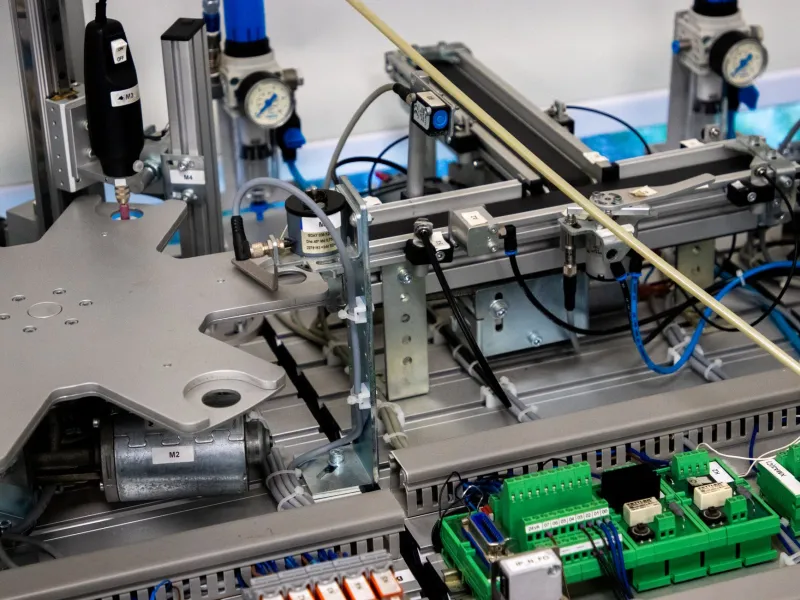
For the better part of a decade, the prevailing wisdom in industrial robotics held that more sensory input was always preferable to less. Add another LiDAR unit. Layer in a second camera array. Bolt on a force-torque sensor, an inertial measurement unit, and a suite of proximity detectors for good measure. The logic was intuitive: a robot that perceives more of its environment should, in theory, perform better within it.
The results, in practice, have been considerably more complicated.
Across American manufacturing floors—from automotive assembly plants in the Midwest to electronics production facilities along the Southeast corridor—engineers are confronting a paradox that the sensor arms race quietly produced. Systems instrumented with exhaustive sensory arrays are not outperforming their leaner counterparts. In many documented cases, they are underperforming them, failing more frequently, requiring more maintenance hours, and introducing latency that undermines the very precision they were designed to support.
The industry is beginning to name this phenomenon. Some call it sensor saturation. Others frame it as the data-reliability inversion. Whatever the label, the underlying engineering reality is the same: past a certain threshold, additional sensing capability becomes a liability rather than an asset.
The Fusion Problem Nobody Talks About Enough
At the core of the issue lies sensor fusion—the computational process by which a robot's control architecture integrates inputs from multiple heterogeneous sources into a coherent, actionable environmental model. In principle, fusion should produce a picture of the world that is richer and more accurate than any single sensor could generate alone. In practice, it introduces a cascade of failure modes that compound as sensor count increases.
Each additional data stream must be temporally synchronized, spatially calibrated, and weighted appropriately relative to other inputs. Discrepancies between sensors—caused by manufacturing tolerances, thermal drift, vibration, or simple age-related degradation—generate conflicting signals that fusion algorithms must reconcile in real time. When those conflicts cannot be resolved within the system's decision cycle, the result is hesitation, erratic behavior, or outright task failure.
Dr. Patricia Nguyen, a control systems researcher affiliated with a major Midwestern technical university, has characterized the problem succinctly in published work: "Every sensor you add is another source of disagreement your system has to arbitrate. Below a certain complexity threshold, arbitration is manageable. Above it, you are engineering instability."
The threshold Nguyen references is not fixed—it varies by application, environment, and processing architecture. But the existence of that threshold is increasingly difficult to dispute.
Case Evidence: When Stripping Down Meant Stepping Up
The clearest evidence for sensor restraint comes not from academic literature but from the factory floor itself.
One mid-scale automotive components manufacturer operating facilities in Ohio undertook a sensor rationalization program in 2022 after persistent reliability issues with a newly deployed robotic welding cell. The cell had been instrumented with dual vision systems, a suite of proximity sensors, and continuous joint-torque monitoring across six axes. Mean time between failures was running well below projections, and maintenance costs were consuming a disproportionate share of the deployment's operating budget.
Engineers conducted a systematic audit of which sensor inputs were actually influencing control decisions during normal operations versus which were generating data that the system logged but rarely acted upon. The findings were striking: a substantial portion of the sensor suite was contributing noise rather than actionable signal. After removing redundant proximity sensors, consolidating to a single calibrated vision system, and simplifying the torque-monitoring architecture, the cell's reliability improved markedly. Unplanned downtime dropped by more than thirty percent over the following two quarters.
A similar rationalization effort at a consumer electronics assembly operation in North Carolina produced comparable results. That facility had integrated a dense array of force-sensing hardware into a pick-and-place line, anticipating that granular tactile feedback would reduce part-handling errors. Instead, the volume of force data overwhelmed the line's edge-processing capacity, introduced decision latency, and generated false-positive fault conditions that halted production. Selective reduction of the force-sensing array, paired with improved filtering on retained sensors, resolved the throughput problem without sacrificing handling precision.
The Maintenance Multiplier
Beyond the computational challenges of sensor fusion, there is a practical maintenance dimension that deployment planners frequently underestimate. Every sensor on a robotic platform represents a component that can fail, drift out of calibration, accumulate contamination, or require periodic replacement. In a high-mix, high-volume production environment, the maintenance burden of a heavily instrumented robot scales nonlinearly with sensor count.
Technicians responsible for keeping robotic systems operational report that dense sensor arrays complicate fault isolation significantly. When a system with twenty sensors begins behaving anomalously, identifying which sensor—or combination of sensors—is responsible for the deviation can consume hours of diagnostic time. A system with eight well-chosen sensors presents a far more tractable troubleshooting problem.
This maintenance multiplier has direct financial consequences. Organizations that have conducted total cost of ownership analyses on heavily instrumented deployments frequently find that sensor-related maintenance costs represent a larger share of operating expense than initial procurement projections anticipated. For smaller manufacturers operating on tighter margins, those costs can materially affect the economic case for automation.
Intelligent Filtering as the Engineering Alternative
The answer, as the more forward-thinking corners of the US robotics engineering community are demonstrating, is not to abandon sophisticated sensing entirely. It is to invest as seriously in data filtering and sensor selection methodology as in sensor hardware itself.
Intelligent filtering approaches—including adaptive Kalman filtering, learned noise suppression, and application-specific signal gating—allow systems to extract reliable signal from a smaller number of well-positioned sensors rather than attempting to reconcile the outputs of a sprawling array. The computational resources freed by reducing raw data volume can be redirected toward faster, more confident decision-making.
Some developers are formalizing this philosophy into their platform design processes, conducting structured sensor necessity reviews before finalizing hardware specifications. The question driving those reviews is direct: does this sensor contribute information that will change a control decision, or does it contribute information that the system will ultimately discard? If the answer is the latter, the sensor does not belong on the platform.
Redefining Robustness
The broader implication of the sensor restraint movement is a refinement in how the robotics industry defines robustness. For years, robustness has been implicitly equated with comprehensiveness—a robust robot was one that could perceive and respond to the widest possible range of conditions. The evidence accumulating from American factory floors suggests a more nuanced definition is warranted.
True robustness, in this emerging view, is the capacity to perform reliably under real-world operating conditions over an extended deployment lifetime. That capacity depends not on the volume of sensory data a system can ingest, but on the quality of the decisions it can make quickly and consistently with the data it has.
The robots earning the highest marks for operational reliability in American manufacturing today are, in many cases, not the most elaborately instrumented machines on the floor. They are the machines whose engineers asked hard questions about what sensing was genuinely necessary—and had the discipline to stop there.