Drift and Decay: The Hidden Engineering Battle to Keep Deployed Robots Accurate
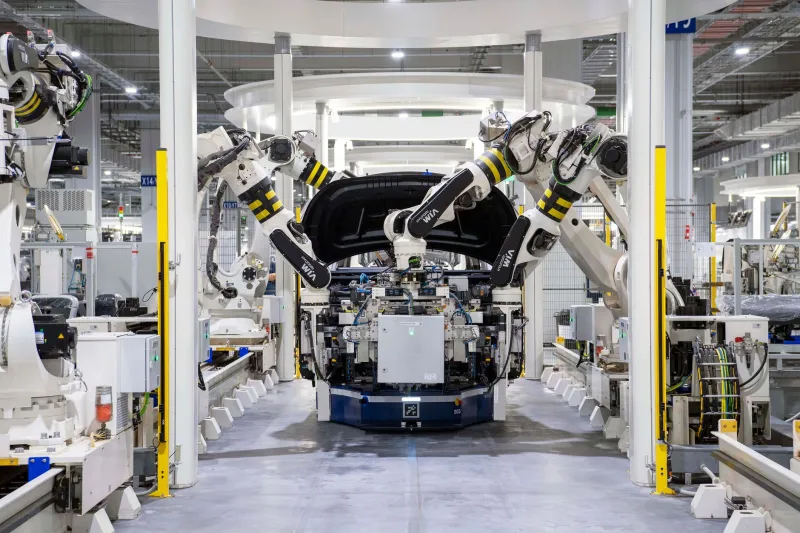
There is a quiet irony embedded in modern industrial robotics. Engineers spend weeks—sometimes months—calibrating a robotic system to tolerances measured in fractions of a millimeter, only to watch that precision erode steadily once the machine enters production. The robot that performed flawlessly during commissioning is, in a very real mechanical sense, a different machine by the end of its first week on the floor. This phenomenon, broadly referred to as mechanical drift, is one of the most persistent and underappreciated challenges in applied robotics today.
For engineers and developers working on automation deployments across American manufacturing, understanding the mechanics of this decay—and the strategies being developed to counteract it—is no longer optional. It is foundational.
Why Robots Lose Their Calibration
The root causes of drift are multiple and, in many cases, unavoidable given the physical realities of industrial environments. At the most fundamental level, the joints, actuators, and structural members of a robotic arm are subject to the same forces that affect all mechanical systems: thermal expansion, material fatigue, bearing wear, and backlash accumulation.
Temperature is perhaps the most insidious contributor. A factory floor is rarely a thermally stable environment. Ambient temperatures shift with production loads, HVAC cycling, and proximity to heat-generating equipment. As a robot's structural components expand and contract across these thermal gradients, the geometric relationships between joints—relationships that calibration procedures assume to be fixed—change in ways that are difficult to predict without continuous monitoring. Even a one- or two-degree Celsius shift in the temperature of a robot's base casting can introduce positional errors that exceed acceptable tolerances for high-precision tasks such as welding seam tracking or electronic component placement.
Beyond temperature, bearing preload diminishes over time. The precision ball bearings and harmonic drive units that govern joint motion are designed to operate within specific preload ranges. As those components wear—even within their rated service life—the effective stiffness of the joint changes, and the robot's kinematic model, established during calibration, no longer accurately predicts the tool center point's actual position in space.
Finally, there is the matter of fastener relaxation and structural settling. Mounting hardware, end-effector attachment points, and even the robot's base plate can shift subtly under repeated dynamic loading. Each of these micro-displacements compounds the others, producing a cumulative positional error that grows faster than most deployment teams anticipate.
The Gap Between Lab Performance and Field Reality
Robotic systems are typically calibrated in controlled environments that bear limited resemblance to their eventual operational context. Cleanrooms and integration facilities offer stable temperatures, vibration-isolated floors, and careful handling. Factory floors offer none of these amenities. Forklifts pass nearby, conveyor systems introduce structural vibration, and coolant mist from adjacent machine tools settles on sensor surfaces.
The transition from lab to floor is where calibration assumptions begin to fail. What engineers in the US robotics industry often refer to as the "deployment gap"—the measurable difference between a robot's certified performance and its actual field performance—can manifest within hours of initial production startup. For manufacturers running tight tolerances in sectors such as aerospace component fabrication or medical device assembly, this gap is not an abstraction. It translates directly into scrap rates, rework costs, and quality escapes.
The frustration is compounded by the fact that the robot itself typically reports no fault. Its internal encoders confirm that joints have moved to commanded positions. The control system is satisfied. Only an external measurement—a laser tracker survey, a ballbar test, or a failed inspection at the next station—reveals that the tool center point is no longer where the program expects it to be.
Engineering Responses: From Periodic Recalibration to Continuous Compensation
The traditional response to mechanical drift has been scheduled recalibration: pulling the robot from production at defined intervals, running a standardized measurement routine, and updating the kinematic model accordingly. This approach works, but it carries significant costs. Downtime during recalibration reduces throughput, and the intervals between calibrations leave a window during which parts produced may fall outside tolerance without detection.
The more sophisticated response emerging across the industry involves embedding compensation directly into the robot's operational loop. Several approaches are gaining traction among US-based integrators and OEMs.
In-process measurement and correction uses external metrology systems—laser trackers, structured light scanners, or vision-based reference targets—to continuously or periodically compare the robot's actual tool center point position against its commanded position. When deviation exceeds a defined threshold, the control system applies a correction offset without halting production. Companies integrating this approach report measurable reductions in part-to-part variation over extended production runs.
Thermal compensation models embed temperature sensor data into the robot's real-time kinematic calculations. By characterizing the thermal expansion behavior of a robot's structural components during commissioning, engineers can construct correction tables that adjust joint targets dynamically as ambient and structural temperatures fluctuate. This approach is particularly effective for mitigating the largest single contributor to drift in many factory environments.
AI-driven drift prediction represents the frontier of this field. By training models on historical measurement data from deployed robots, researchers and development teams are working to predict when a given unit will drift beyond tolerance—before it actually does. This predictive posture allows maintenance teams to schedule recalibration during planned downtime rather than reacting to quality failures. Several robotics platform developers are actively integrating this capability into their fleet management software, positioning it as a differentiating feature for large-scale automation deployments.
The Role of Hardware Design in Long-Term Stability
Software compensation can only accomplish so much. Hardware engineers are also revisiting fundamental design choices with drift resistance in mind. Harmonic drive manufacturers are refining gear geometries to reduce the rate of preload decay. Robot OEMs are exploring carbon fiber structural components that offer superior thermal stability compared to aluminum castings. Integrated joint torque sensing, once reserved for collaborative robots, is being adapted for industrial arms as a means of detecting and compensating for load-induced deflection in real time.
Mounting and fixturing design is receiving renewed attention as well. Kinematic coupling mounts—which establish repeatable, deterministic contact between the robot base and its mounting surface—allow robots to be removed for maintenance and reinstalled to their original calibrated position without a full recalibration cycle. For high-mix environments where robots are periodically reconfigured, this represents a meaningful operational advantage.
Toward Self-Sustaining Accuracy
The long-term direction of the field is clear: robotic systems should maintain their own accuracy without requiring frequent human intervention. The engineering path to that goal runs through a combination of smarter sensors, more adaptive control architectures, and hardware designed with long-term dimensional stability as a primary specification rather than an afterthought.
For the engineers, developers, and automation architects responsible for keeping American manufacturing competitive, the calibration problem is not a peripheral concern. It sits at the intersection of mechanical engineering, software development, and operational strategy. The manufacturers who solve it most effectively—who deploy robots that stay accurate through months of continuous production rather than drifting quietly toward failure—will hold a compounding advantage over those who continue to treat recalibration as an unavoidable cost of doing business.
The robots are learning. The question is whether they can be engineered to remember.