Never Quite Perfect: The Enduring Human Role in Keeping Precision Robots on Target
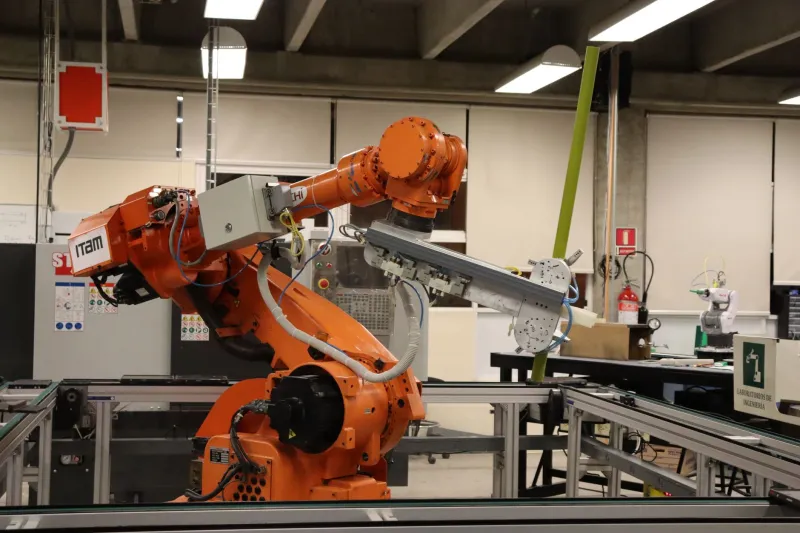
In the engineering literature, a modern six-axis industrial robot is a marvel of repeatability. Manufacturers routinely advertise positioning accuracy within fractions of a millimeter, and under controlled laboratory conditions, those figures hold. Step onto an active factory floor in Ohio, Texas, or Michigan, however, and the story becomes considerably more complicated. Vibration, thermal expansion, worn joints, and the slow accumulation of microscopic mechanical stress conspire to push even the most sophisticated robotic systems out of specification—sometimes subtly, sometimes catastrophically.
The result is a persistent, industry-wide challenge that automation vendors rarely advertise: precision robots require constant human attention to remain precise.
The Distance Between the Drawing and the Shop Floor
When an engineering team designs a robotic workcell, the tolerances live comfortably inside CAD software. Every component fits within defined parameters. Simulated toolpaths execute flawlessly. The digital twin behaves exactly as intended.
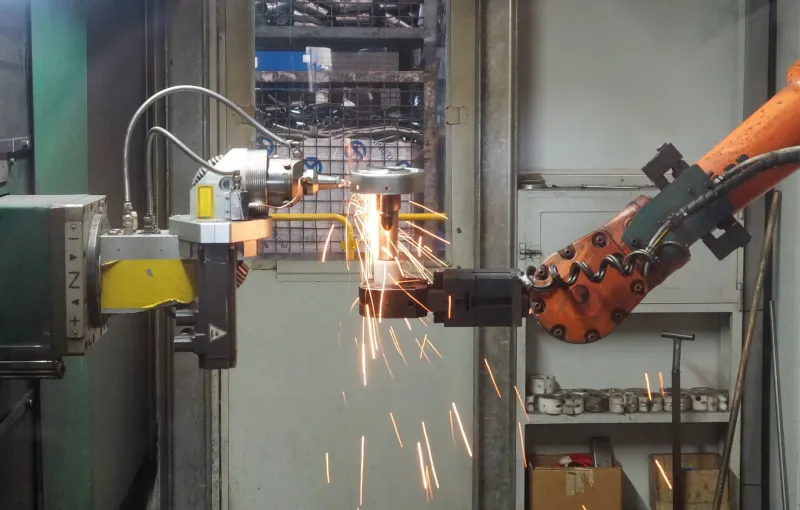
Reality introduces variables that no simulation fully accounts for. A robot arm operating in an automotive stamping plant is subject to temperature swings that can exceed 40 degrees Fahrenheit across a single shift. Metal expands. Servo feedback loops that were tuned at 68°F begin to drift at 95°F. The cumulative effect on a welding robot, for instance, can shift a weld bead by several millimeters—well outside the tolerances required for structural integrity.
Thermal drift is only one contributor. Mechanical wear in gearboxes, backlash in joints, and even the gradual settling of the robot's mounting surface all degrade positional accuracy over time. In high-cycle environments—where a robot may complete tens of thousands of operations per day—these effects compound quickly. A system that passed its acceptance test in January may be producing out-of-spec parts by March without a single visible component failure.
What Field Technicians Actually Do
For engineers who have spent their careers on the software or design side, it can be surprising to learn how much of a field technician's time is devoted to calibration work rather than breakdown repair. Skilled robotics technicians across American manufacturing facilities routinely perform kinematic calibration, tool center point verification, and payload re-identification as part of standard maintenance cycles.
Kinematic calibration, in particular, is a labor-intensive process. A technician uses a laser tracker or a coordinate measuring machine to map the robot's actual joint positions against its theoretical model, then feeds correction parameters back into the controller. Depending on the robot type and required accuracy, this process can take several hours per unit—and in large automated facilities running dozens of arms, the cumulative labor cost is substantial.
Tool center point drift is another frequent culprit. When a robot's end-effector is replaced, repaired, or simply jostled during a collision event, the TCP offset stored in the controller no longer matches physical reality. Recertifying that offset requires methodical measurement and adjustment, tasks that demand both technical knowledge and hands-on experience that cannot yet be delegated to the robot itself.
Why Automation Hasn't Automated This Problem Away
The question of why robots cannot simply calibrate themselves is more nuanced than it appears. The short answer is that self-calibration requires a ground truth—some external reference against which the robot can measure its own error. Generating that reference reliably, affordably, and without interrupting production is a genuinely difficult engineering problem.
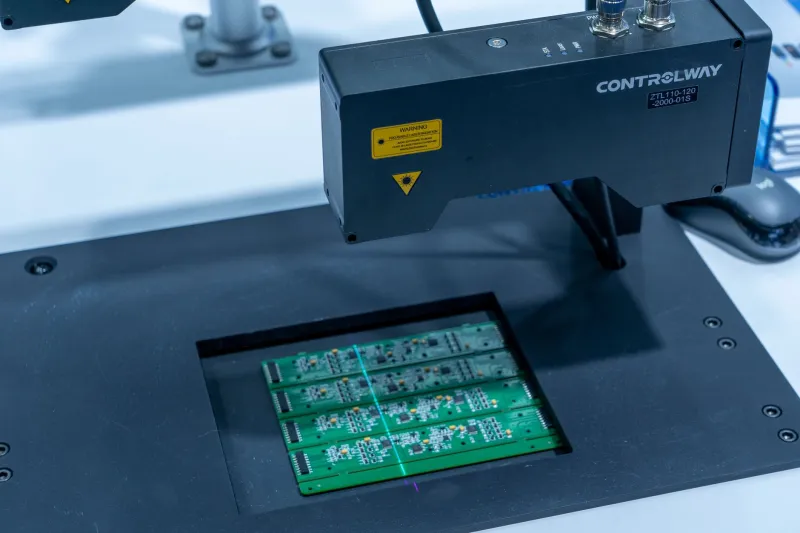
Some manufacturers have made meaningful progress. Integrated force-torque sensing, for example, allows certain cobots to detect contact forces and infer positional errors during low-speed probing routines. Vision-guided calibration systems, which use cameras and known reference targets to estimate kinematic errors, are becoming more accessible as camera hardware costs decline. A handful of companies are exploring acoustic sensing and inertial measurement as supplementary calibration signals.
Yet each of these approaches carries trade-offs. Vision-based systems require clean optical conditions that are difficult to guarantee in dusty or high-humidity environments. Force-torque sensing adds cost and complexity to the end-effector assembly. Inertial approaches struggle to isolate calibration-relevant signals from the general mechanical noise of an active production environment.
The deeper challenge is that self-calibration routines must be triggered somehow—either on a schedule, in response to a detected error, or continuously in the background. Continuous background calibration during production is technically attractive but computationally demanding and potentially disruptive to cycle times. Scheduled calibration requires the system to go offline, which reintroduces the downtime costs that automation was supposed to eliminate.
Emerging Approaches Worth Watching
Several research directions show genuine promise for reducing the human calibration burden, even if they have not yet eliminated it.
Digital twin synchronization is one of the more compelling near-term strategies. Rather than treating the digital twin as a static design artifact, advanced implementations continuously update the model with telemetry from the physical robot—joint temperatures, motor currents, vibration signatures—and use that data to predict drift before it becomes a production problem. Companies including Siemens and Rockwell Automation have invested heavily in this space, and several US-based robotics integrators are beginning to offer it as a managed service.
AI-assisted anomaly detection represents another avenue. Machine learning models trained on historical calibration data can identify the early signatures of positional drift in real-time sensor streams, alerting technicians before tolerance violations occur rather than after. This does not eliminate the need for human intervention, but it compresses the window between problem onset and corrective action, reducing scrap rates and rework costs.
At the research frontier, self-calibrating robotic architectures—systems designed from the ground up with embedded measurement capability—are being explored at institutions including MIT, Carnegie Mellon, and several national laboratories. These designs embed reference sensors directly into the robot's structure, enabling continuous kinematic self-assessment without external measurement equipment. Commercial viability remains several years away for most applications, but the engineering foundations are being laid now.
The Technician's Role Is Evolving, Not Disappearing
For American manufacturers navigating the tension between automation ambitions and workforce realities, the calibration challenge carries a practical message: the human expert is not an interim solution waiting to be replaced. In the near term, the role of the skilled calibration technician is more likely to evolve than to disappear.
As self-calibration tools mature, technicians will shift from performing manual measurements to interpreting system-generated diagnostics, validating AI-driven correction recommendations, and managing the edge cases that automated routines cannot handle. The expertise required will be different—more data-literate, more systems-oriented—but no less essential.
For developers and engineers building the next generation of robotic platforms, that reality should inform design decisions from the earliest stages. Serviceability, sensor integration, and calibration workflow are not afterthoughts to be addressed at commissioning. They are core engineering requirements that determine whether a system performs in the field as well as it does in the simulation.
Precision, it turns out, is not a property that robots possess. It is one they must continuously earn—and for now, they still need help doing it.