Garage Engineers: How Sub-$100 Robotics Kits Are Quietly Building America's Automation Workforce

Photo: teenager building robot kit at workbench maker space electronics, via ohmyclassroom.com
For most of the twentieth century, serious robotics education required serious institutional backing. University labs, corporate R&D facilities, and government-funded programs held a near-monopoly on the hardware, software, and mentorship necessary to develop competent engineers. That era is ending — not with a dramatic announcement, but with a $49 kit arriving in a cardboard box on a teenager's doorstep.
Across the United States, an accelerating movement of low-cost robotics platforms, decentralized online communities, and accessible maker spaces is reshaping who gets to call themselves an engineer — and when that journey begins.
The Hardware That Started a Movement
The democratization of robotics education did not happen overnight. It traces back to a gradual convergence of falling component costs, the proliferation of open-source microcontroller platforms, and a consumer electronics supply chain that now delivers sophisticated sensors and actuators at commodity prices.
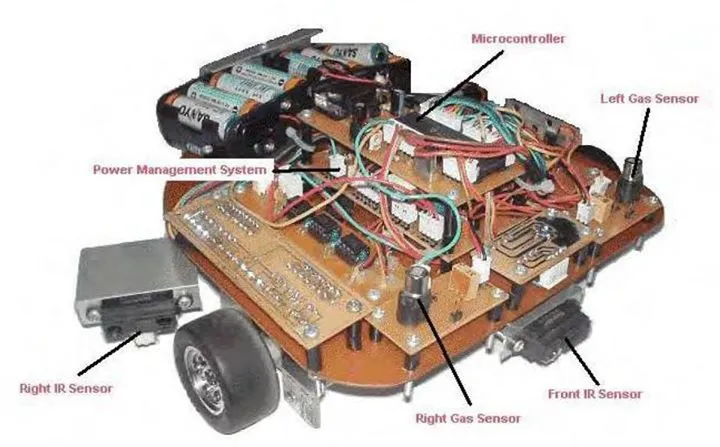
Platforms such as the Arduino Uno, Raspberry Pi, and ELEGOO-based robotics starter kits have become the entry points for hundreds of thousands of American learners annually. A functional, programmable robot arm capable of basic pick-and-place operations can now be assembled for under $60. Wheeled autonomous platforms with ultrasonic sensors and line-following capabilities routinely retail below $40. These are not toys — they are legitimate engineering tools that teach PWM control, I2C communication protocols, and real-time sensor feedback loops.
For context, the same concepts underpinning a $45 obstacle-avoidance robot are operationally relevant in a $250,000 autonomous mobile robot navigating an Amazon fulfillment center. The physics, the logic, and the debugging methodology are fundamentally identical.
Beyond the Classroom: Where Learning Actually Happens
Traditional STEM education, despite decades of reform efforts, remains constrained by standardized curricula, underfunded lab budgets, and the geographic realities of rural and underserved communities. A school district in rural Mississippi and one in suburban Connecticut do not have equivalent access to robotics equipment — but both have access to YouTube, GitHub, and a two-day shipping window.
This is precisely where informal learning ecosystems have stepped in. Online communities on platforms such as Reddit's r/robotics, the Arduino Forum, and dedicated Discord servers collectively host millions of active participants who exchange code, troubleshoot builds, and mentor beginners without institutional gatekeeping. A sixteen-year-old in Appalachia can post a video of a malfunctioning servo and receive technically rigorous feedback from a working engineer in Seattle within hours.
Maker spaces have extended this dynamic into physical form. Organizations such as TechShop's successors, local library innovation labs, and nonprofit-operated community workshops now operate in cities and mid-sized towns across the country. These facilities provide access to soldering stations, 3D printers, laser cutters, and oscilloscopes — tools that transform a hobbyist's theoretical understanding into practiced, physical competence.
Prototyping Real Problems, Not Hypothetical Ones
What distinguishes the current generation of DIY robotics learners from earlier hobbyist communities is the directness with which they are applying their skills to genuine problems. The maker movement, once associated primarily with decorative electronics projects, has matured into a serious prototyping culture.
Consider documented examples emerging from maker communities in recent years: students in Texas developing low-cost automated irrigation controllers for small-scale farms; a team of high schoolers in Michigan prototyping a wheelchair-mounted robotic arm using salvaged servo motors and a Raspberry Pi Zero; an undergraduate in Georgia independently building a fire detection drone using thermal imaging modules sourced for under $80. None of these projects required institutional sponsorship. All of them required exactly the kind of iterative, systems-level thinking that advanced automation employers cite as most difficult to find in entry-level candidates.
The willingness to build, fail, rebuild, and document that process is a disposition being cultivated organically in garages and community workshops — and it is precisely the disposition that robotics engineering demands.
The Talent Pipeline Implications
American industry is facing a well-documented shortage of robotics and automation engineers. A 2023 analysis by Deloitte and the Manufacturing Institute projected a shortfall of approximately 2.1 million skilled manufacturing workers by 2030, with robotics integration competencies among the most acute gaps. Traditional four-year engineering programs, while valuable, cannot scale fast enough to meet this demand — nor do they adequately reach the demographic breadth the industry requires.
The DIY robotics movement represents a parallel pipeline that industry leaders are beginning to take seriously. Companies including Seeed Studio, Adafruit, and SparkFun have structured their educational product lines explicitly around professional skill development, not merely hobbyist entertainment. Competitions such as FIRST Robotics and VEX — both of which have seen record participation numbers in recent years — function as de facto talent identification programs for engineering recruiters.
Community colleges in states including Ohio, Texas, and California are formalizing this pipeline further by offering accelerated automation technician certifications that explicitly build upon the self-taught foundation many applicants already possess. The assumption that a candidate arrives with zero prior exposure is increasingly obsolete.
Engineering Culture, Redistributed
Perhaps the most consequential aspect of the affordable robotics movement is not the specific technical skills it transmits, but the engineering culture it propagates. The habit of approaching a problem with curiosity, decomposing it into solvable components, and iterating toward a functional solution is not discipline-specific — it is foundational to every domain within advanced automation.
When a fourteen-year-old spends a weekend debugging why their ultrasonic sensor is returning inconsistent distance readings — checking wiring, reviewing datasheets, testing code logic, and eventually tracing the issue to electrical noise from a nearby motor — they are not simply learning electronics. They are developing the diagnostic methodology that separates a capable engineer from a credential holder.
The $50 robot does not build the next generation of American engineers on its own. But paired with accessible online communities, physical maker spaces, and an industry increasingly willing to recognize non-traditional credentials, it is functioning as the catalyst for a talent development ecosystem that no single institution could have designed.
The automation industry has spent years asking where its next engineers will come from. A growing number of them are already building in their garages.